
Scoliosis Assessment & Management
at Gold Coast Chiropractic
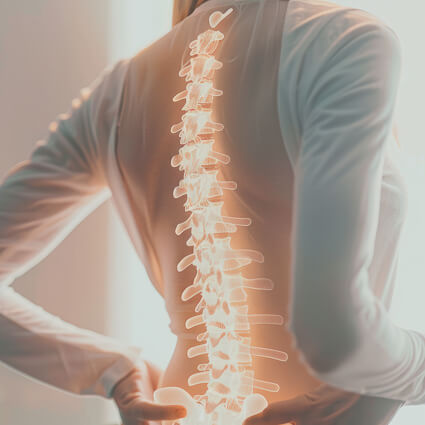 Scoliosis may raise many questions, whether it has been identified during a school screening, diagnosed after imaging, or noticed through changes in posture. While some spinal curves remain stable throughout life, others require regular monitoring, particularly during periods of rapid growth.
Gold Coast Chiropractic, located within the Spine Centre, provides scoliosis assessment, monitoring and conservative management for children, teenagers and adults across Gold Coast. The focus is on helping you better understand your spinal condition, identifying whether a curve is likely to change over time, and discussing management options that suit your individual circumstances.
Not every scoliosis case requires active care, and not every patient will need bracing or surgery. A careful assessment helps determine the most appropriate next step.
What Is Scoliosis?
Scoliosis is a three-dimensional change in the shape of the spine, where the vertebrae curve sideways while also rotating. Although it is most commonly identified during adolescence, scoliosis can occur in children and adults of all ages.
Common forms include adolescent idiopathic scoliosis, adult degenerative scoliosis, juvenile scoliosis and congenital scoliosis. Many curves are mild and remain stable, while others may progress during growth or as age-related changes occur. Early assessment helps determine whether observation, ongoing monitoring or another management approach is appropriate.
Recognising the Signs of Scoliosis
Scoliosis often develops gradually and may not cause discomfort, particularly in children and teenagers. Parents, teachers and sporting coaches are often the first to notice changes.
Signs that may indicate scoliosis include:
- Uneven shoulders
- One shoulder blade appearing more prominent
- Uneven waist or hips
- A rib hump when bending forwards
- Leaning to one side
- Changes in posture
- Clothing sitting unevenly
- Back pain, particularly in adults
If you notice any of these changes, an assessment can help determine whether scoliosis is present and whether monitoring is recommended.
What Happens During a Scoliosis Assessment?
Every assessment begins with understanding the individual rather than focusing only on the spinal curve. Your appointment may include a health history, postural and spinal examination, Adam’s Forward Bend Test, scoliometer measurements, assessment of spinal mobility and functional movement, review of previous imaging, and referral for imaging where clinically appropriate.
Following your assessment, you’ll have a clearer understanding of:
- The type of scoliosis present
- Whether the curve appears stable or may require monitoring
- Whether further imaging is appropriate
- Whether exercises may be beneficial
- Whether referral for bracing or another healthcare provider should be considered
- Recommendations based on your individual presentation
Evidence-Informed Management Options
Management is guided by factors including your age, skeletal maturity, Cobb Angle, symptoms, curve pattern and likelihood of progression.
For many younger patients with mild curves, regular observation during growth is all that is required. Scheduled reviews allow changes to be identified early if they occur.
Individual exercise programs may also be recommended to encourage better posture, body awareness, muscular endurance and spinal mobility. Although current research has not shown that exercise alone consistently prevents curve progression, it may improve movement and day-to-day function.
Chiropractic care may assist with improving spinal mobility, easing joint stiffness, addressing muscular tension and helping manage discomfort associated with scoliosis. Current evidence does not support chiropractic care as a cure for scoliosis or as a standalone approach to preventing progression. Instead, it may form one part of a broader management plan alongside exercise, monitoring and referrals where appropriate.
For adolescents whose curves are considered at higher risk of progression, referral for bracing may be recommended. When required, referrals to orthopaedic spinal specialists are arranged so care remains coordinated with your GP and other healthcare providers.
Care Across Every Stage of Life
Book Your Scoliosis Assessment
Whether you’ve recently been diagnosed with scoliosis, have noticed changes in posture, or would like ongoing monitoring of an existing spinal curve, an assessment can provide greater clarity about your spinal health and available management options.
Contact Gold Coast Chiropractic today to arrange your scoliosis assessment.
